Showing posts with label Tenses Review. Show all posts

Wednesday, 13 March 2013

Why are jeans so popular?

You are going to
  • discuss fashion and jeans
  • watch a video clip and do some listening activities on the history of denim (Int)
  • do a reading activity about the history of denim (Int
  • do a listening activity about the popularity of jeans (U.Int)
  • write about the influence of fashion on people


1) Discuss
  • Are you wearing jeans now?
  • How often do you wear jeans? 
  • What are jeans made of?
  • Do you like jeans? Why? / Why not?
  • Why do you wear jeans?
  • If you are in class now, how many people are wearing jeans?
  • Why do you think they are so popular? 
  • What do you know about the history of jeans?


2) Watch
What do you know about the history of jeans?
Look at the sentences in the exercise below.
A) Watch the video below and decide if they are true or false.


B) Watch again and do the gap-fill exercise


3) Read
Read the text below and put the sentences in the correct spaces


4) Listen
Listen to the clip below
You are going to listen to Anthropologist Daniel Miller talking about the popularity of  jeans on the BBC World service programme The Forum.
Why does he think jeans are so popular?


From The Forum http://www.bbc.co.uk/programmes/p00np2s1#p00p8k7m


Now read the summary below and fill in the gaps.
Vocabulary - to plug = to promote / market / advertise


5) Write
Fashion trends are difficult to follow these days and it's widely believed that they primarily exist just to sell clothes. Some people believe that we shouldn't follow them and that we should dress in that we like and feel comfortable in.
To what extent do you agree or disagree with this opinion?
(IELTS)


Printable worksheets here


More
Giving Up Marilyn Manson  Fashion, Listening, Phrasal Verbs / Idioms and Slang, Writing

Read
http://www.bbc.co.uk/news/magazine-17101768

The history of jeans
http://www.jeans-and-accessories.com/history-of-blue-jeans.html


Sunday, 12 February 2012

Accidental Inventions and Hidden Heroes

You are going to
  • practise past simple and past continuous
  • watch a video about inventions and do a matching exercise 
  • watch a video about a science exhibition and do a quiz
  • listen to a radio interview about what motivates inventors and do a gap-fill
  • read an interview with inventor Mark Champkins
  • discuss and describe inventions
  • write about an invention


1) Video 1 - Discuss
  • What are the most useful inventions that we use today?
  • What couldn't you live without?
  • Is it a simple everyday object like a pen or a paper clip or something more complex?


You are going to watch a video called "10 Accidental Inventions"
  • What inventions do you think they are?
  • Why do you think they are called "accidental"?

Watch and find out


2) Matching exercise
Match the beginnings of the sentences with the ends. Watch the video again if you need to.


3) Grammar
Look at the sentences again. How many tenses are there?
Which phrases are Past Simple?
Which are Past Continuous?
What's the difference between the Past Simple and Continuous?
Not sure? Look here


4) Video 2 - Discuss
You are going to watch a clip about an exhibition called the "Hidden Heroes Exhibition."
  • Who do you think are the "Hidden Heroes?
  • Why do you think they have called them "hidden"?
  • What kind of objects do you think are in the exhibition?
Watch the clip


Now answer these questions. Watch the video again if you need to.


5) Discuss - Listen
Rawlplugs and screws
  • Do you agree that the objects in the Hidden Heroes exhibition are very important?
  • Why do inventors invent things?
  • What do you think is the main motivation for inventing? 
Listen to an interview with inventor Mark Champkins on BBC World Tonight and find out.

Who invented the paper clip & the rubber band? (mp3)


Fill in the gaps in the summary with the verbs from the list. Choose them from the drop-down menu.

Printable version available here


6) Reading
Interview with Mark Champkins. Look at the questions.
  • What inspired you to become an inventor?
  • What is your favourite invention ever?
  • What invention could you not live without?
  • Which object in the museum is the most inspirational or influenced your time here so far?
Go here to read Mark's answers
http://sciencemuseumdiscovery.com/blogs/insight/inventor-in-residence/


7) Discuss
  • What would you invent if you could?
  • What inventions does the world need now? Why?


8) Writing / Discussion
What invention couldn't you live without?

Describe it.
  • Is it a simple everyday object or something more complex?
  • What's it for?
  • What kind of design has it got?
  • Has the design changed much since it was invented?

Look on the internet. Find out some history
  • Who invented it?
  • Where was it invented?
  • Was it invented by accident?
  • Why and how was it invented?
  • What were they trying to do when they invented it (what else were they working on)?


What do you think about it?
  • Why is it important?
  • What did it change or make better for people?
  • What couldn't we do without it?
  • Why couldn't you live without it?


Write about your invention
Write it using 3 - 4 paragraphs (see above)
Don't forget to have an introduction (say what it is and why you are choosing it)
and a conclusion (your opinion of it / why couldn't you live without it and why you think it's important)


More practice
More reading
http://www.sciencemuseum.org.uk/hiddenheroes


More past continuous and past simple
http://efllecturer.blogspot.com/2011/04/past-continuous-with-gifs_12.html
http://efllecturer.blogspot.com/2011/04/past-simple-past-continuous-with-gif.html


More inventions http://efllecturer.blogspot.com/2011/12/what-would-have-happened-if-10.html


Saturday, 28 January 2012

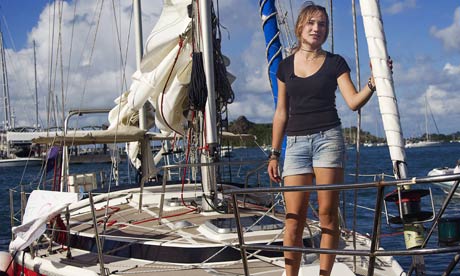
Achievements - Laura Dekker: a heroine for our times?

You are going to
    • Review past tenses
    • Read and analyse a text about Laura Dekker
    • Look at vocabulary and expressions to describe personality
    • Discuss keeping diaries and blogs
    • Discuss and write about an achievement using a variety of past tenses
    • Discuss and write some IELTS style questions


    1) Introduction
    A) Who is Laura Dekker?
    What do you know about her?
    • Where is she from?
    • How old is she?
    • What is her achievement?
    • How long did it take?
    • Why did the authorities try to stop her?


    B) Watch the news report to check your answers


    C) Watch again, listen and fill in the spaces in the gap-fill exercise with a verb

      D) Grammar - Look again. What are the tenses in each sentence?


      2) Discuss
      Look at the map below
      • Would you like to sail around the world on your own?
      • What skills do you think you need?
      • What kind of a person do you need to be? Think of some adjectives or expressions.
      • Do you agree with the Dutch authorities that Laura was too young to do the trip?
      • What do you think Laura learned from the trip?


      3) Reading
      3a) Read the text below quickly and put these paragraph headings into the correct spaces in the text. Each heading describes the paragraph which follows

         A) She is determined
         B) She is a reluctant superstar
         C) She is good with cockroaches
         D) She was born to sail
         E) She becomes the youngest person to circumnavigate the globe


      Read the text again and find the answers to these questions.

      3b) What expressions or adjectives are used to describe Laura?
      3c) What did she learn from the trip?


      4) Vocabulary
      Check / Guess / Find out
      What do these underlined expressions from the text mean? Try and guess from the other words in the sentence.

      Paragraph 1
      a trip her father had hoped would "cure her wanderlust"

      Paragraph 2
      She took on six-metre-high waves and extreme weather
      heading into the Cape of Good Hope
      her storm jib (a sail used in storms) got jammed
      Another of her sails ripped completely
      She dodged near-collisions with cargo ships
      Not in the least squeamish, she had to rescue live flying fish that had flung themselves into her cabin, and scrub the stinking remains of decomposing squid from the deck
      the ants and cockroaches that had stowed away in her cabin.

      Paragraph 3
      she set off
      in the meantime

      Paragraph 4
      Dekker has just pipped the previous youngest


      Now do the exercise


      5) Grammar
      Tenses. Look again at part 1D. What were the tenses?
      How many tenses can you find in the reading text? Give one example of each.
      • Find a past simple =   She survived weeks at sea...
      • Find a past continuous =
      • Find a present perfect =
      • Find a past perfect = 
      • Find a conditional = 
      • Find a passive = 


        6) Discuss
        • What do you think of Laura's achievement?
        • Do you think she is a heroine?
        • Was she right to follow her dream or was she too young?
        • Were the Dutch authorities right to try and stop her?
        • How much do you think she learned on the trip?
        • Would she have learned as much at school?

        Look at Laura's blog http://www.lauradekker.nl/English/News.html
        • Why do you think she kept a diary / blog?
        • Do you keep a diary or blog?
        • What are the advantages of keeping a learning diary or blog in English?

        Think of an achievement in your life and talk about it eg learning to drive, learning English, entering a competition, doing a course...
        • Why did you decide to do it?
        • Describe doing it. Was it difficult? How did you feel during and after?
        • What did you learn from it?
        • What did you learn about yourself?


        7a) Writing
        Now write about your achievement
        Organise and plan
        • Paragraph 1 - Introduce the achievement. Say why you wanted to do it. Use past tenses  - past simple and continuous / past perfect
        • Paragraph 2 / 3 - Describe doing it - preparation, difficulties, your feelings. Use past tenses - past simple and continuous / past perfect. Use some adjectives to describe the activity and your feelings.
        • Paragraph 4 - What have you learnt from doing it? How has it changed your life? How have you changed? What are the benefits? Would you recommend the activity to others? Try and use a variety of tenses; past simple and continuous / past perfect / present perfect / conditional / passive


        7b) Writing (IELTS)
        Discuss and prepare to write about one of these questions
        • Should parents be obliged to send their children to school? Or should they have the right to choose how to educate them?
        • Some people believe that governments have a duty to make sure all their citizens are healthy, safe and well educated. Others say that this can lead to state interference and infringes on the freedom of the individual to choose how to live. Discuss both views and give your opinion
        • “Not everything that is learned is contained in books.” Compare and contrast knowledge gained from experience with knowledge gained from books. In your opinion, which source is more important? Why? Give reasons for your answer and include any relevant examples from your own knowledge or experience.


        8) More reading

        Ex 3 and 4 - Printable version here 
        Other answers - Highlight below
        1C Answers
        1) has. 2) arrived, set. 3) had. 4) were, was 5) were, wanted, wanted. 6) had, have. 7) has.

        1D Answers 1) Present Perfect. 2) Past Simple. 3) Past Perfect. 4) Past Simple, Past Passive. 5) Past Simple x 3. 6) Past Perfect, Past modal - should. 7) Present Perfect Passive.

        3a) Answers
        She was born to sail
        She is good with cockroaches
        She is determined
        She becomes the youngest person to circumnavigate the globe
        She is a reluctant superstar

        3b) Answers 
        stoic, a cool head, wanderlust, not in the least squeamish, determined, experienced solo sailor, values solitude and a proximity to nature, has a deep appreciation of the beauty the world has to offer, "mostly I simply enjoy the endless silky blue ocean and the quiet peace that it brings,"  "At sea, I feel comfortable and I come to rest."

        3c) Answers
         - To prepare for the trip Dekker had done training in first aid and sleep management, and had become a more experienced solo sailor,
         - Sailing around the world, navigating difficult port approaches, storms, dangerous reefs, and the full  - responsibility of keeping herself and her boat safe
         - Learned to value and appreciate nature


        5) Answers
        past simple - She survived weeks at sea...
        past continuous - Her Dutch parents were living on a yacht...
        present perfect - Her mother has said...
        past perfect - ... flying fish that had flung themselves into her cabin
        conditional - If Laura had drowned people would have accused us of not doing enough to protect her
        passive - Dekker was placed under state guardianship by a Dutch court