Showing posts with label Work. Show all posts

Sunday, 19 August 2012

What's the point of university?

You are going to
  • listen to people comparing university education with work experience
  • do 2 listening comprehension exercises
  • discuss and write about education


1) Discuss
  • What is the value of a university education?
  • Is it a means to an economic goal, a route to a better job?
  • Is it an end in itself, learning for the sake of learning?
  • Does having a lot of qualifications mean you will be good at your job? 
  • Is it better to leave school and learn the skills needed for work a while working?
  • Does / should a university education prepare you for life?
  • Is going to university the best option for you? Why?


2) Listen - Why some18-year-olds are shunning university.
On this clip from Radio 4 Quentin Letts talks to A-level students about where they see their futures and if they see university as the best option.
  • What advantages do they give for going straight into work?
  • What advantages do they give for going to university?
Listen and find out.

Vocabulary
A-levels =  A-level exam courses are studied over a two-year period and are recognised as the standard for assessing the suitability of applicants for academic courses in English, Welsh, and Northern Irish universities.
Shunning = avoiding, turning away from


Listen again and answer the questions below


3) Discuss
  • Is it possible to succeed in life with going to university or having academic qualifications?
  • Do you know anyone who has done so?


4) Listen - Jon Snow: There is life after A-levels
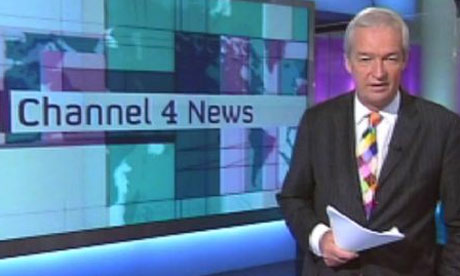
Jon Snow
You are going to listen to Jon Snow (born 28 September 1947). Jon is a British journalist and presenter, currently employed by ITN. He is best known for presenting Channel 4 News in the UK. 
He was not a very succesful student at school but says "there is life after "A" levels".
Listen and find out.
  • What does he think you have to do to be successful in life?


Listen again and fill in the gaps in this summary.
Vocabulary
Graft = hard work


Read again
  • Do you agree with Jon when he says "people have different ways of achieving what they want to do"?
  • Do you think the advice he gives in the 3rd paragraph is good advice?

Printable worksheets here


5) Discuss / Write (IELTS)
Choose 1 of the questions below. 
  • Discuss how you will write it with a partner. 
  • Discuss the points you will make, you introduction and your conclusion.
  • Make a plan of the points you want to make and write your answer.

1) Some people believe that studying at university or college is the best route to a successful career, while others believe that it is better to get a job straight after school.
Discuss both views and give your opinion. 


2) Some people think that universities should provide graduates with the knowledge and skills needed in the workplace. Others think that the true function of a university should be to give access to knowledge for its own sake, regardless of whether the course is useful to an employer.
What, in your opinion, should be the function of a university?


More
Teaching and learning styles - What makes a good teacher? How do you like to learn?
http://efllecturer.blogspot.co.uk/2011/07/teaching-and-learning-styles-what-makes.html

The listenings contain several conditional forms. Can you find them?
Practise more conditionals here.
http://efllecturer.blogspot.co.uk/2011/12/what-would-happen-if-2nd-conditional.html

and here
http://efllecturer.blogspot.co.uk/2011/12/what-would-have-happened-if-10.html


Sunday, 15 May 2011

Job Interviews: Body Language - Making A Good First Impression

    You are going to

    • watch a clip and discuss how to create a good impression in a job interview.
    • watch a clip with Judi James, one of the UK’s leading body language / behaviour experts, who will give you some advice on good body language
    • answer the questions based on the clips, discuss and write an advice leaflet.

    Video 1
    Discussion - Job Interviews

    • What advice would you give to someone going to a job interview?
    • Think of some ideas and then watch the video to check. What are their Dos and Don'ts?


    Answers in black - Highlight here =  Here are some; Dress well, Good handshake, Give a concise summary of your career and goals, focus and what can be improved about yourself, avoid answering personal questions by emphasising your professional life... and turn off your phone


    Video 2
    1) Discuss  
    • What is body language?

    Answer highlight here = Body language is a form of non-verbal communication, which consists of body posture, gestures, facial expressions, and eye movements.


    2) Who is Judi James?
    Before you watch. Go here http://www.knightayton.co.uk/female-presenters/judi-james and find out
    • Who is Judi James? 


    3) Before you watch
    Discuss the photos


    4) Watch the clip and check your answers.  Then answer the questions below.

    1) Make a great entrance
        How many seconds do you have to impress people when you first walk into an interview?
        What should you put on your face? 
        Why should you scan and look around the room?

    2) A good handshake
        Why is a good handshake vital?
        What is a good handshake? 
        Where should you look?
        What should you remember to do? 

    3) Posture
        What should you practise if you are nervous?
        Why should you sit well back?
        What should you do with your elbows and legs?

    4) Hand Gestures

        Why shouldn't you fold your arms?
        Where should you keep your hands? 

    5) Mirroring
        What is "mirroring"?
        Why should you do it?


    Video link here https://www.youtube.com/watch?v=akLgnwZ4T_Q
    or
    http://www.videojug.com/film/how-can-i-make-a-good-first-impression-2


    5) What can you remember?

    Answer the questions in the quiz


    7) Writing

    • Write a leaflet giving advice to someone who is going to a job interview.
    • Write a leaflet giving advice to someone who is looking for work.

    Don't forget to use language for advice and obligation - You should / shouldn't / ought to / must / mustn't
    And make suggestions - Why don't you..?  

    See here for more language for advice and suggestions 


    Thursday, 5 May 2011

    Presentations: How to Present Yourself

    You are going to
    • discuss giving presentations
    • watch 2 videos giving advice on doing presentations
    • do some comprehension activities


    It's quite common to have to do powerpoint presentations nowadays. You may have to do one for study, work or in a job interview. In some EFL or ESOL exams you may have to talk on a topic for 1 or 2 minutes. It's always best to plan first.  
    Watch these videos and answer the questions to help you plan your presentations.


    1) Discuss - Presenting Yourself

    • Do you like giving presentations? 
    • How do you feel when you give a presentation?
    • Do you have any advice for giving presentations?
    • In groups see how much you can find out from each other in a minute
    • Write a list of tips. Then watch the clips to check your ideas and answer the questions.


    2) Watch "Presentational skills" by Doug Jefferys

    Answer these questions.
    1. What are the top 3 fears?
    2. What is interesting about "death"?
        He says that at a funeral "The person giving the eulogy would rather be __ ___ ____.
    3. What do we associate eye contact with?
    4. Why should we pause?
    5. What examples of body language does he give?
    6. What does he say about planning effective content?


    Answers (in black). Highlight here
    1. Speaking to a group of people, heights, insects and bugs
    2. Its low place on the list. It's second from bottom.
        in the box
    3. Veracity / telling the truth
    4. To ingest the last thing you said
    5. Don't put your hands in your pockets, rules are broken by people who "can" (= because they have charisma)
    6. - 1) Tell them how you are going to bore them.
          2) Bore them.
          3) Tell them how you bored them.


    3) Watch  "How To Give A Good Presentation"


    What are these students' 5 steps to giving a good presentation?
    Make notes.


    Answers (in black). Highlight here.

    1) Planning; make sure you know who your audience is
    Is your aim to inform entertain or persuade your audience?

    2) Dealing with nerves; you never look as nervous as you think you do, breathe deeply

    3) Structure; Intro, Main body and conclusion

    4) Body language; eye contact, move around, no hands in pockets, don't speak too loud or too quiet, smile, use appropriate humour

    5) Visual Aids; Powerpoint, Video or real objects to make it more interesting. Don't bore the audience 

    Can the advice here be used for any other activities you do when studying?  -  
    Answer  =   Numbers 1 and 3 can be used for planning writing


    Discuss 
    What advice the 2 videos have in common?