Showing posts with label Life and how to live it. Show all posts

Thursday, 18 April 2013

What's on your Bucket List?

You are going to
  • listen to Oli Milroy talking about making a "bucket list"
  • talk about future plans / dreams / targets / achievements
  • practise the future perfect

Teacher's note; the gap-fill exercise can be done before the listening. Students try to fill in the spaces and then listen to check their answers.


1) Discuss
  • What are your plans for the future?
  • Where do you see yourself in 12 months / five years / ten years?
  • Is there anything you really want to do / see / experience in life?
  • What's a bucket list?

Use
I have always wanted to...
I really want to try... (-ing)
I'd love to...
It's my dream to...
I wish I could...
Wouldn't it be great to...?


A bucket list is a list of things to do before you die. It comes from the slang expression "To kick the bucket" which means to die.


2) Listen
"Bucket List"
Listen to Oli Milroy.
Oli is an Olympic Torchbearer and Arctic Explorer. He is 19 years old.
  • What 3 questions does he ask at the beginning?
  • Why did he make his own bucket list?


from BBC Radio Devon


Fill in the gaps below with a word. Listen again to check or if you have problems

Printable worksheet here
Answers to questions above - highlight below
To push himself out of his comfort zone and learn something new about himself
- Do you know yourself?
- Do you know what you want from life?
- How will you judge whether your life has been a success?


3) Discuss
  • Do you agree with Oli?
  • How should we live life?
  • Should we experience as much as possible?


4) Speak
The Future Perfect
  • What is te future perfect
  • How do we make it?
  • What do we use it for?
 Look at he presentation below. Make some sentences using the pictures as prompts.


5) Practise
Make your own bucket list.
What will you have achieved / done / seen in 12 months / 5 years etc?
Where will you have been to?

In 12 months I will have...
By the time I'm 30 I will have...


6) Listen and read
Here's a song by Nelly Furtado called "Bucket List". Does it give you any ideas for your bucket list?


There are many talented people who haven't fulfilled their dreams because they over thought it, or they were too cautious, and were unwilling to make the leap of faith. 
- James Cameron

The only thing that will stop you from fulfilling your dreams is you. - Tom Bradley

You are never too old to set another goal or to dream a new dream. - C.S. Lewis


More
Looking to the Future - Activities and Achievements, Discussion Activities, Future, Future Continuous, Future Perfect, Intermediate, Predictions, Targets, Technology, Upper Intermediate


3 Things I learned while my plane crashed by Ric Elias, Conditionals 1 and 2, Discussion Activities, IELTS, Listening, Reading, Upper Intermediate, Writing


Monday, 8 April 2013

How many friends do you need?

You are going to
  • discuss friendship
  • listen to a song about friends and do a gap-fill
  • listen to a discussion on friendship
  • practise the 1st conditional


1) Discuss
  • What's a friend?
  • What do friends do?


2) Listen
Watch and listen to the song from the comedy TV series Flight of the Conchords.
What do friends do?


  • What do you think of the song?
  • Is it true?
  • Is it funny?


Listen again and do the gap fill


"Friends" is written by Jemaine Atea Mahana Clement, Bret Peter T. Mckenzie
Lyrics © Universal Music Publishing Group, BMG RIGHTS MANAGEMENT US, LLC, Warner/Chappell Music, Inc., Sony/ATV Music Publishing LL


3) Discuss
How many friends do you need?
Justin Bieber said this week that he only has four friends. "I only have like four people that I keep in contact with... I don't need a bunch of friends to make me happy," he said.
Social media like Facebook allows us to have hundreds if not thousands. What is the best number of friends to have?


4) Listen 
Nikki Moore, founder of the online technology site girlgeekchic.com, and Sarfraz Manzoor, writer and broadcaster, discuss how many friends is good for you.
  • How many friends do they think is the right number
  • What is a friend?


First broadcast on BBC Radio 4's Today programme on Saturday 6 April 2013.
http://www.bbc.co.uk/news/entertainment-arts-22050453


Listen again and do the quiz below.


Printed worksheets available here


5) Discuss
  • Do you agree / disagree with the comments made in the radio clip? Which ones? Why?
  • What's the best way to make friends?
  • Do you think it's better to have lots of friends or just few close friends? Why?


More posts you might find interesting
What will happen if..? (1st Conditional) Conditionals, Elementary, Future, Health and Safety, Writing a leaflet 


Exposed (CEOP Video - Staying Safe Online) Discussion Activities, Elementary, Intermediate, Listening, Present Simple, Writing. Technology


The Virtual Revolution (Episode 4) - BBC Series,.Advanced, Discussion Activities, Film and TV, IELTS, Listening, Technology, Writing


More
Classroom ice breaking activity - Speed dating
Best done at the start of a course. Students have to find the person in the class they have the most in common with.
  1. Organize students in a circle.
  2. Students have two minutes to interview each other on habits, likes, dislikes etc.
  3. After 2 minutes students change places to talk to someone new. Continue until everyone has finished
  4. Each student reports to class who they have the most in common with.


Flight of the Conchords  http://flightoftheconchords.co.nz/

Sunday, 19 August 2012

What's the point of university?

You are going to
  • listen to people comparing university education with work experience
  • do 2 listening comprehension exercises
  • discuss and write about education


1) Discuss
  • What is the value of a university education?
  • Is it a means to an economic goal, a route to a better job?
  • Is it an end in itself, learning for the sake of learning?
  • Does having a lot of qualifications mean you will be good at your job? 
  • Is it better to leave school and learn the skills needed for work a while working?
  • Does / should a university education prepare you for life?
  • Is going to university the best option for you? Why?


2) Listen - Why some18-year-olds are shunning university.
On this clip from Radio 4 Quentin Letts talks to A-level students about where they see their futures and if they see university as the best option.
  • What advantages do they give for going straight into work?
  • What advantages do they give for going to university?
Listen and find out.

Vocabulary
A-levels =  A-level exam courses are studied over a two-year period and are recognised as the standard for assessing the suitability of applicants for academic courses in English, Welsh, and Northern Irish universities.
Shunning = avoiding, turning away from


Listen again and answer the questions below


3) Discuss
  • Is it possible to succeed in life with going to university or having academic qualifications?
  • Do you know anyone who has done so?


4) Listen - Jon Snow: There is life after A-levels
Jon Snow
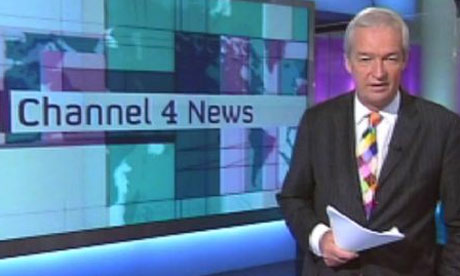
You are going to listen to Jon Snow (born 28 September 1947). Jon is a British journalist and presenter, currently employed by ITN. He is best known for presenting Channel 4 News in the UK. 
He was not a very succesful student at school but says "there is life after "A" levels".
Listen and find out.
  • What does he think you have to do to be successful in life?


Listen again and fill in the gaps in this summary.
Vocabulary
Graft = hard work


Read again
  • Do you agree with Jon when he says "people have different ways of achieving what they want to do"?
  • Do you think the advice he gives in the 3rd paragraph is good advice?

Printable worksheets here


5) Discuss / Write (IELTS)
Choose 1 of the questions below. 
  • Discuss how you will write it with a partner. 
  • Discuss the points you will make, you introduction and your conclusion.
  • Make a plan of the points you want to make and write your answer.

1) Some people believe that studying at university or college is the best route to a successful career, while others believe that it is better to get a job straight after school.
Discuss both views and give your opinion. 


2) Some people think that universities should provide graduates with the knowledge and skills needed in the workplace. Others think that the true function of a university should be to give access to knowledge for its own sake, regardless of whether the course is useful to an employer.
What, in your opinion, should be the function of a university?


More
Teaching and learning styles - What makes a good teacher? How do you like to learn?
http://efllecturer.blogspot.co.uk/2011/07/teaching-and-learning-styles-what-makes.html

The listenings contain several conditional forms. Can you find them?
Practise more conditionals here.
http://efllecturer.blogspot.co.uk/2011/12/what-would-happen-if-2nd-conditional.html

and here
http://efllecturer.blogspot.co.uk/2011/12/what-would-have-happened-if-10.html


Sunday, 26 February 2012

Inspiring People

You are going to
  • watch a video and talk about people who inspire others
  • practise past simple
  • practise some vocabulary connected with occupations and people who try to change the world
  • talk about what / who inspires you


1) Discuss
What does inspiring mean?
  • What kind of people or things inspire you?
  • In what jobs is it necessary to try and inspire people?
  • Why do people try to inspire others?
Look at the photos below. 
  • How many of them do you know? 
  • What do you know about them?


Look at their names

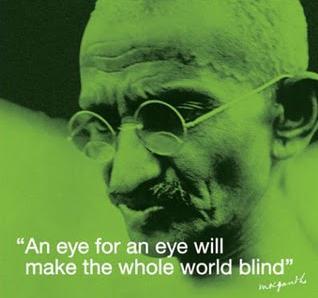
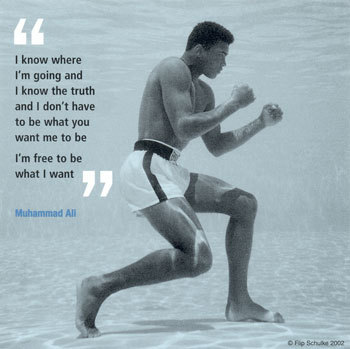
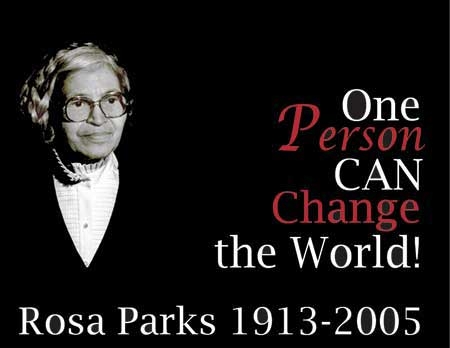
Top left to right - Mother Teresa, Winston Churchill, Muhammad Ali, Che Guevara, Bob Marley,
Rosa Parks, Nelson Mandela, Martin Luther King, Mohandas Gandhi, Emmeline Pankhurst


2) Do the matching exercise
How many do you know? Match the occupation with the name.
You can drag and drop the occupations to the names.


3) Discuss
Who do you think is the most inspiring of the 10?
Why?
Watch the clip. Do you agree with the choice of people?


4) Discuss
  • Do you agree with the choice of people in the list? Why / Why not?
  • What can you remember about the people in the clip?


5) Do the quiz
Be careful of spelling and punctuation. You can use numbers in some answers.


6) Read
Can you put the correct past forms in the gaps?


7) Do the crossword
The answers are all from the video / reading text.
How many can you remember?

Crossword printable version here
Printable exercises here


8) Speak
Do a balloon debate  http://en.wikipedia.org/wiki/Balloon_debate


9) Discuss / Write
Who inspires you?
Write about someone who inspires you.


Plan
1. Introduce the person. Who are they? Why are they important to you?
2. Describe the the person in more detail. Describe their character / personality. Why / How do they inspire you? Do they inspire you because of their beliefs / their actions? What exactly have you learnt from them?
3. Are you a better person because of them? How have they changed you? Give an example of something you do that they inspired.
4. Conclude. How would your life be different without them? Restate why they are important to you in a few words.


10) Read
What inspires you? Try a quiz
http://quizilla.teennick.com/quizzes/1476632/what-inspires-you

http://www.quibblo.com/quiz/1hR2N3l/Who-inspires-you


11) More
Shakira and Beyonce / Writing a biography of someone you admire
http://efllecturer.blogspot.com/2011/10/shakira-and-beyonce-contrasting-writing.html


Occupy Education  http://occupyedu.tumblr.com/


Saturday, 4 February 2012

Willpower - How can you improve it?

You are going to 
  • discuss willpower
  • listen to a radio programme about willpower and do a gap-fill exercise.
  • do a quiz to find out how much willpower you have


Discuss
  • Do you have willpower?
  • What is willpower?
  • When do you need it?
  • When you decide to do something do you always finish it?
  • Oscar Wilde said "I can resist everything but temptation". Can you resist everything?
  • How can you improve your willpower?


Listening
  1. Read the summary below of the BBC Radio 4 interview with Roy Baumeister about willpower. Can you guess any of the words which go in the gaps?
  2. Listen to the recording below and fill in the gaps with the word you hear.
Be careful of your spelling!


According to a new book, the most important thing to make a person successful is willpower and not self-esteem as is sometimes thought.
Professor Roy Baumeister, author of Willpower: Rediscovering Our Greatest Strength, talks to the Today programme


 Click play to listen. Fill in the gaps.


More
Listen to a debate on this subject BBC's The Forum here  http://www.bbc.co.uk/programmes/p00mxby8

Printable version here

Reading
How much willpower do you have?
Find out in this quiz  http://www.youthink.com/quiz.cfm?obj_id=80878

Why willpower matters – and how to get it
http://www.guardian.co.uk/lifeandstyle/2012/feb/07/why-willpower-matters


Thursday, 26 January 2012

Groundhog Day

Teacher's note; the worksheet below was designed to be watched in a computer room as an individual student activity. It is quite long (the opening 30 minutes of the film) and revises present simple for habit. The advantages of doing the activity individually are that it gives the student the chance to pause and rewind difficult sections of dialogue until they have understood and completed the worksheet to their own satisfaction. However it can be done as group activity in class if it is divided into more easily digestible chunks.
The film is not on Youtube

DVD available from amazon here


1) Introduction
Festival
  • What happens at the Groundhog Day festival?
  • When is it?
Find out here

Film
Watch the film trailer
  • What is Phil Connors' job? 
  • Why is he in Punxsutawney?
  • What strange thing happens to him there?


2) Reading
  • Toby Young's review of Groundhog Day here
  • Pages from New progress to First Certificate: Self-study student's book By Leo Jones (1997, out of print) based on Tony Young's review on Google Books here


3) Film worksheet


4) Discuss
  • Why do you think Phil is living the same day again and again?
  • What are the advantages and disadvantages of living the same day again and again?
  • If you were Phil what would you do? 
  • Would you want to stay repeating the same day or would you try to find a way out?
  • What do you think Phil will learn from the experience?
  • What do you think is the message of the film?


5) More Groundhog Day resources
The Best Resources For Groundhog Day
by Larry Ferlazzo
http://larryferlazzo.edublogs.org/2009/02/03/the-best-resources-for-groundhog-day/ 


Friday, 2 September 2011

29 Ways to Stay Creative

You are going to
  • discuss how to be creative in work and studies
  • fill in a gap-fill exercise with some verbs
  • design a presentation telling others how to be a good student / worker / athlete etc


Discuss
  • Do you think it's important to be creative in your life?
  • Do you think it's important to be creative in your studies or work?
  • In what ways does being creative help you to learn or work?


 Task 
Watch the clip.
How many ways to stay creative can you remember after you watch?


Now do the gap-fill.
Choose the correct verb from the drop-down menu.
How quickly can you do it and get 100%?


Discuss
  • How many do you agree with?  Why?
  • How many are good advice for life?
  • How many do you do?
  • Do you think any of the ideas can help you with your studies or work?
  • How many are good for learning a language?


Writing task
  • Write a list of ways of being a good student / driver / athlete / healthy person... or choose another job or activity.
  • Make a powerpoint presentation with pictures and show it to your classmates.
  • If you know how, add music to the powerpoint and make a presentation like the clip.
  • Make sure you use lots of verbs. 


    Sunday, 10 July 2011

    3 Things I learned while my plane crashed (TED) - Ric Elias

    You are going to 
    1. watch a clip about what a man learnt from a plane crash
    2. read a text and do a vocabulary matching exercise
    3. discuss what you would do in an imaginary situation using the 2nd conditional
    4. write about what we learn from difficulty
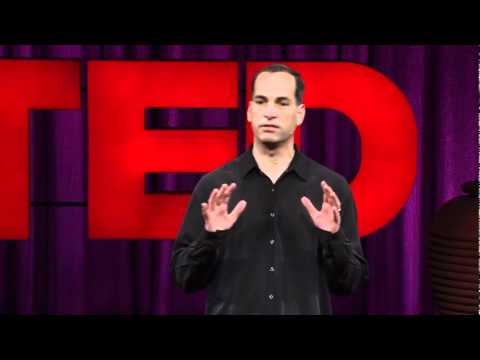


    Ric Elias was a survivor of Flight 1549 which crash-landed soon after takeoff from New York in 2009. In this short clip he tells us the three things he learned about himself from the accident and how everything in his life changed from that moment on.


    1) Introduction
    Watch this clip about Flight 1549
    • What caused the accident?
    • Where did the aircraft land?


    Highlight here for answers = 1) Birds  2) In the Hudson River


    2) Discuss
    • Have you ever flown in an aeroplane?
    • Do you like flying?
    • Have you ever had any problems while flying?
    • What do you think about when you fly?
    • How would you feel if something like Flight 1549 happened to you?
    • Do you think we can learn anything when bad things happen to us?
    • What do you think are the most important things in life?


    3) Read the following text
    Ric Elias descibes what happened when the plane stated to fall.

    Find the answers to these questions while reading
    1. Where was he sitting?
    2. Who did he talk to?
    3. What three things did the pilot do?

    Imagine a big explosion as you climb through 3,000 ft. Imagine a plane full of smoke. Imagine an engine going clack, clack, clack, clack, clack, clack, clack. It sounds scary. Well I had a unique seat that day. I was sitting in 1D. I was the only one who could talk to the flight attendants. So I looked at them right away, and they said, "No problem. We probably hit some birds."  The pilot had already turned the plane around, and we weren't that far. You could see Manhattan. Two minutes later, three things happened at the same time. The pilot lines up the plane with the Hudson River. That's usually not the route. He turns off the engines. Now imagine being in a plane with no sound. And then he says three words -- the most unemotional three words I've ever heard. He says, "Brace for impact."  I didn't have to talk to the flight attendant anymore.  I could see in her eyes, it was terror. Life was over.

    Answers - Highlight here = 1) Seat 1D 2) Flight attendants 3) The pilot lines up the plane with the Hudson River. He turns off the engines. He says, "Brace for impact."


    4) Watch the video
    The title of this video is "3 things I learned while my plane crashed"
    Before you watch - what 3 things about life do you think Ric learned?
    Watch the video to find out if you are right.


    Read the text to check your answers

    Now I want to share with you three things I learned about myself that day. I learned that it all changes in an instant. We have this bucket list, we have these things we want to do in life, and I thought about all the people I wanted to reach out to that I didn't, all the fences I wanted to mend, all the experiences I wanted to have and I never did. As I thought about that later on, I came up with a saying, which is, "I collect bad wines." Because if the wine is ready and the person is there, I'm opening it. I no longer want to postpone anything in life. And that urgency, that purpose, has really changed my life.

    The second thing I learned that day -- and this is as we clear the George Washington Bridge, which was by not a lot -- I thought about, wow, I really feel one real regret. I've lived a good life. In my own humanity and mistakes, I've tried to get better at everything I tried. But in my humanity, I also allow my ego to get in. And I regretted the time I wasted on things that did not matter with people that matter. And I thought about my relationship with my wife, with my friends, with people. And after, as I reflected on that, I decided to eliminate negative energy from my life. It's not perfect, but it's a lot better. I've not had a fight with my wife in two years. It feels great. I no longer try to be right; I choose to be happy.

    The third thing I learned -- and this is as your mental clock starts going, "15, 14, 13." You can see the water coming. I'm saying, "Please blow up." I don't want this thing to break in 20 pieces like you've seen in those documentaries. And as we're coming down, I had a sense of, wow, dying is not scary. It's almost like we've been preparing for it our whole lives. But it was very sad. I didn't want to go; I love my life. And that sadness really framed in one thought, which is, I only wish for one thing. I only wish I could see my kids grow up. About a month later, I was at a performance by my daughter -- first-grader, not much artistic talent ... ... yet.  And I'm balling, I'm crying, like a little kid. And it made all the sense in the world to me. I realized at that point, by connecting those two dots, that the only thing that matters in my life is being a great dad. Above all, above all, the only goal I have in life is to be a good dad.

    I was given the gift of a miracle, of not dying that day. I was given another gift, which was to be able to see into the future and come back and live differently. I challenge you guys that are flying today, imagine the same thing happens on your plane -- and please don't -- but imagine, and how would you change? What would you get done that you're waiting to get done because you think you'll be here forever? How would you change your relationships and the negative energy in them? And more than anything, are you being the best parent you can?

    Thank you.


    Answers - Highlight below
      1. He no longer wants to postpone anything in life
      2. He decided to eliminate negative energy from his life
      3. The only goal he has in life is to be a good dad


        5) Read the text again
        Some words in the text have been highlighted in bold.
        Can you match the words on the left with the definitions on the right?
        The first has been done for you. You can drag and drop the words using your mouse.


        Watch the clip on TED with an interactive transcript


        6) Grammar Discussion
        At the end Ric says "I challenge you guys that are flying today, imagine the same thing happens on your plane...  how would you change? What would you get done that you're waiting to get done because you think you'll be here forever? How would you change your relationships and the negative energy in them?"

        Ric asks us to imagine this situation happening to us (although we hope it never does!)
        If we are talking about imaginary situations in the present or future what tense do we use?

        Answer = Highlight here  2nd Conditional  = What would you do if it happened?
        Would + verb + If +Past 
        or 
        If + Past + Would + verb. See presentation below


        7) Now discuss these questions
        Imagine you are Ric in the plane.  If something like this happened to you...
        • What would you change about yourself?
        • Would you do anything different in your life?
        • What would you remember?
        • What would you be thankful for?
        • What would you regret?
        • What would you change in your relationships with your friends and family?
        • What decisions would you make for the future?


        If you are not sure or can't remember how to use conditional 2 look here


        More practice on conditionals here  http://efllecturer.blogspot.com/2011/04/conditionals-1-and-2.html
        and here http://www.scoop.it/t/conditionals

        Find out more about Flight 1549 here 
        http://en.wikipedia.org/wiki/US_Airways_Flight_1549


        8) Writing
        Do you agree or disagree with the following statement? Most experiences in our lives that seemed difficult at the time become valuable lessons for the future. Use reasons and specific examples to support your answer. (250 words - IELTS)

        Writing tips and ideas - Don't forget to plan!
        • Look carefully at the question
        • Think about what you have learned in life (eg learning to drive, learning English, relationships...).
        • Do you agree with the statement? Why? Why not?
        • How much have you learned from doing things that seemed difficult at first?
        • Can you think of any examples? Say what was difficult about them and what you learned.
        • Contrast the idea; think of some easy things you have learned. Do you think they are as important? Do they give as much satisfaction?
        • What do we learn about ourselves from learning difficult things?
        • Don't forget to sum up your ideas in your conclusion.


        Worksheet + Answers
        Happy and safe flying to everyone!

        Sunday, 22 May 2011

        8 Secrets of Success

        You are going to
        1. watch a clip and discuss what makes people successful 
        2. match and discuss some quotes about success 
        3. think of and agree on a motto or slogan for your class
        4. do a quiz to find out if you could be a success
        5. write about what makes a successful teacher / manager / student


          1) Discuss. 
          • What makes someone succesful?
          • What do you think are the secrets of success?


          2) Watch the clip.  
          You are going to watch Richard St John
          What are his eight secrets of success?


          Answer (in black. Highlight here) =  Passion, Work, Focus, Push, Serve, Good, Have ideas, Persist. 


          3) Match the quote to the person
          Can you remember who said what? Match the quotes to the names on the left.
          Watch the video again to check.

          You can watch the clip and read a transcript here
          http://www.ted.com/index.php/talks/richard_st_john_s_8_secrets_of_success.html


          4) Discuss
          • What do you think of the opinions in the quotes?
          • Which do you agree with / disagree with?
          • Do you think they are true? Why? Why not?
          • What are the secrets of being a) a good student? ) b) a good teacher? c) a good leader / manager?

          Read more famous quotes about success http://www.famouslifemottos.org/Success.html


          5) Discussion / group work 
          Slogans / Mottos. 
          Make a slogan for your class or for yourself

          Here are some slogans and mottos

          ·   The pen is in your hand, the rest is still unwritten
          ·   You only go around once in  this life, so you have to grab for all the gusto you can get.  - Schiltz Beer
          ·   Be all that you can be. – US Army
          ·   Just Do It. – Nike
          ·   Taking Care of Business.

          More here  http://en.wikiquote.org/wiki/Advertising_slogans 

          Activity - Work together. Can you think of a slogan or motto for your class? Think of some ideas and choose the best one for your class. Print it or turn it into a poster and put in on the wall!


          6) Reading

          Try these quizzes to find out if you will be successful 

          http://www.quibblo.com/quiz/1AXiEX2/Will-you-be-successful

          http://ezinearticles.com/?Why-Not-Take-The-Success-Quiz-Now?&id=280729


          7) Writing 
          Choose 1
          What do you think are the secrets of being 
          a) a good student?
          b) a good teacher? 
          c) a good leader / manager? 
          Give reasons to support your ideas.


          And so finally...